From Studio Walls to Museum Shelves: Your Playbook for Publishing a Fine Art Coffee Table Book
June 8, 2026 · Tripti Gore Chandorkar

How a collection of paintings can travel from an artist’s studio, through a laptop screen, into the hands of readers, collectors, and museum visitors.
Table of Contents
- Introduction
- Why Should You Consider Creating a Coffee Table Book
- The Process – The Three-Act Journey of a Coffee Table Book
- Coffee Table Book Becomes Part of Your Artistic Ecosystem
- The Golden Age of Independent Creative Publishing
Introduction
There is something deeply satisfying about seeing years of artistic work gathered between the covers of a book.
A painting hanging on a gallery wall exists in a particular place and moment. A visitor may pause before it for a few minutes before moving on. An exhibition itself may only last a few weeks.
But a book is different. A book travels.
It sits on coffee tables, bookshelves, museum counters, and bedside tables. It can cross oceans in a shipping box. It can be opened years later by someone who has never met the artist and never visited the exhibition where the work first appeared.
Recently, I experienced this feeling firsthand while visiting the gift shops at the Worcester Art Museum. There, among carefully curated books, gifts, and artisan objects, sat Chinese Empresses, the coffee table book featuring artist Xiang Li’s extraordinary collection of Chinese Empress paintings.
What struck me most was not simply seeing the book on display. It was remembering where it began…….
About a year earlier, artist Xiang Li, Fei Wu, and I were working on a much simpler project: a small exhibition booklet created to help visitors understand the stories behind a selection of empress paintings displayed during an exhibition at JMAC.
At the time, the goal was modest. Visitors were curious about the historical women they were seeing on the walls, and we wanted to give them something they could hold in their hands and take home. We designed the booklet using the graphic design tool Canva, combining artwork, narrative notes about the Empresses, and visual storytelling.
That little exhibition guide became a companion piece for several exhibitions and cultural events.
Then something remarkable happened. The idea grew. Over time, the exhibition booklet evolved into a full-color coffee table book showcasing all 200 plus Chinese Empress paintings created by Xiang Li. What began as a practical guide for exhibition visitors became a collectible art book, a permanent archive of years of creative work. Today, visitors can discover the book in museum stores, browse it online, and order copies from anywhere in the world.

For artists, photographers, and visual storytellers, this transformation offers an important lesson: You no longer need a traditional publishing house to create a beautiful art book. The tools now exist for independent artists to bring their own books into the world.
Why Should You Consider Creating a Coffee Table Book
A coffee table book is more than a catalog.
It becomes:
– A visual portfolio
– A historical archive
– A storytelling medium
– A professional credential
– A gift for collectors and patrons
– An additional revenue stream
Perhaps most importantly, it preserves years of artistic work in a format that can outlive any single exhibition. Paintings may be sold. Exhibitions come and go. A thoughtfully designed book remains.
The Process – The Three-Act Journey of a Coffee Table Book

Step 1 – The Studio Wall – Curate Your Art Through a Curator’s Lens
Every coffee table book starts with the artwork itself. This could be fine art paintings, photography, textile collections, mixed media projects etc.
The first task is simply gathering high-quality digital images of your work. And then spend time organizing your files.
Create folders by:
– Series
– Chronology
– Theme
– Subject matter
As you review your work, think like a curator rather than a creator. What story is emerging? What journey do you want readers to experience as they turn the pages?
The strongest art books are not random collections of images. They have rhythm, flow, and narrative.
Step 2 – The Design Desk – Design the Book Using Tools like Canva
Choosing a digital graphic design tool for your book design & layout is the first important step. This is where modern technology becomes a tremendous gift for artists. Not long ago, creating a professionally designed book required specialized graphic design software and technical expertise. Today, platforms like Canva allow artists to create beautiful layouts with surprisingly little technical complexity. We used Canva for our first version of the booklet, however, today there are many other easily available online tools to choose from.
Using Canva, you can:
– Select book templates
– Design custom page layouts
– Combine images and text
– Experiment with typography
– Create covers and chapter dividers
– Arrange artwork visually
When we created the early Chinese Empress exhibition booklet, Canva made it easy to combine artwork with historical information in a visually appealing format. The process felt more like arranging an exhibition than designing a publication. Think of each spread as a miniature gallery wall. Allow images room to breathe. Use white space intentionally. Let the artwork remain the hero.
As a next step, consider telling the story behind the art. One of the most common mistakes artists make is assuming the artwork should speak entirely for itself. While the visual work should remain central, readers often appreciate context.
Consider including:
– Artist reflections
– Historical background
– Creative process notes
– Sketches and studies
– Exhibition photographs
– Personal essays
– Quotes and inspirations
The Chinese Empresses project became far richer because it combined visual art with the fascinating stories of the women portrayed. The paintings captured attention. The stories deepened engagement. Together they created a much more meaningful experience.
As a final step in Canva (or any other graphic design tool), create print-ready PDF. Before publishing, review your book carefully. Check for the following:
– Image quality
– Spelling and grammar
– Margins and page numbers
– Color consistency
– Captions and dates
– Cover design
Order of pages matters. A coffee table book should feel like a journey rather than a database. So ask yourself: If someone opened this book for the first time, what emotional experience would they have from the first page to the last? You are now ready to download the complete book as a high-quality PDF.
Step 3 – The Published World – Publish Through Online Platforms like Mixam
Once your design is complete, platforms like Mixam make professional printing and distribution remarkably accessible. For independent artists, Mixam bridges the gap between digital design and physical publication. Below is a simple visual explaining the workflow for publishing your book through Mixam.

Coffee Table Book Becomes Part of Your Artistic Ecosystem
The most exciting part happens after publication. A coffee table book becomes a versatile creative asset. It can support:
– Gallery exhibitions
– Museum partnerships
– Artist talks and Book Signing Events
– Workshops
– Collector relationships
– Educational programs
– Website marketing
– Gift shop sales
In the case of Chinese Empresses, the book became a bridge connecting the paintings, exhibitions, website, and museum audiences. Visitors who may never purchase an original painting can still take home a beautifully produced piece of the artistic journey.
The Golden Age of Independent Creative Publishing
We often hear about technology disrupting industries, but sometimes technology quietly empowers creativity.
Today an artist can photograph their work with a digital camera, design a professional layout using Canva, publish through a platform like Mixam, sell through their website, and place books in museum stores, all without a traditional publisher. This would have been almost unimaginable just twenty years ago.
For artists, photographers, illustrators, and storytellers, there has never been a better time to preserve creative work in book form.
The tools are available.
The barriers are lower than ever.
The only remaining question is: What story do you want your book to tell?
Related Links:
Xiang Li’s Chinese Empress Coffee Table BookIf you want to see the Chinese Empresses book in person, be sure to visit the Worcester Art Museum in Worcester, MA or visit us in one of our upcoming events.
About the author
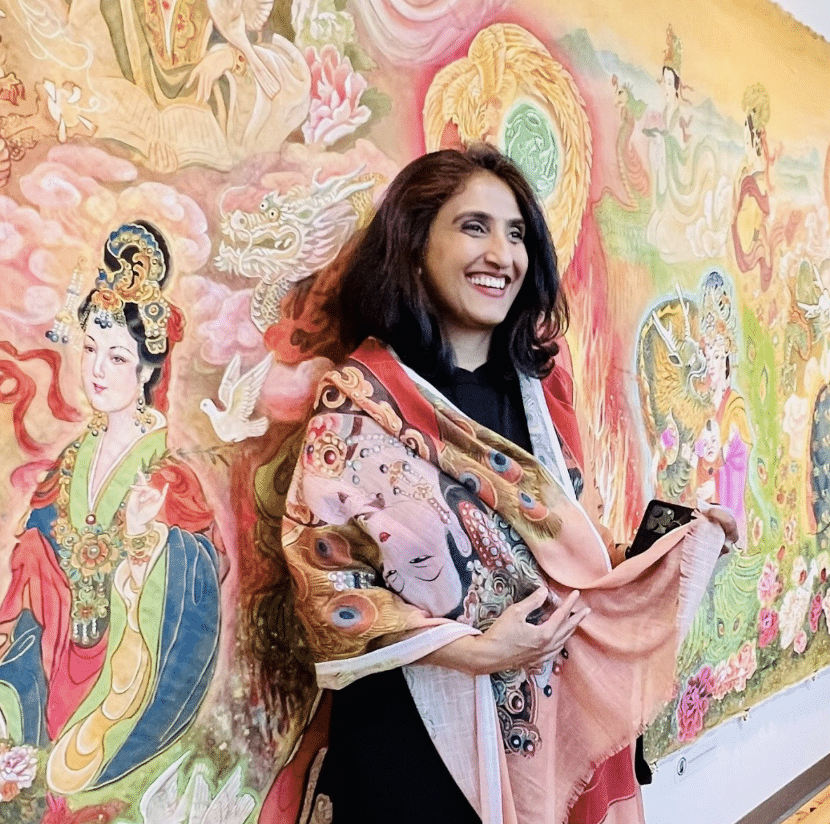
Tripti Gore Chandorkar, the creator and writer behind “triptiji,” launched her blog to celebrate her passion for art, creative projects, and connections with family and friends. With a lifelong love for fine art and writing, Tripti has woven art into her daily life as an enthusiast and hobbyist. Seventeen years ago, her friend Fei Wu introduced her to the artwork of Xiang Li (Fei’s mom), a master artist showcased at xiangliart.com. Since then, Tripti has joined in contributing to Li’s blog, collaborating on designs, and participating in festivals, events, and gallery shows. Through “triptiji,” she shares her journey in the art world and her dedication to supporting other female artists.
More about Tripti