Tracing Artistic Legacies: Qing Dynasty Artifacts at the Victoria and Albert Museum and Xiang Li’s Chinese Empresses
November 19, 2024 · Tripti Gore Chandorkar

Table of Contents
- Introduction
- The Splendor of Qing Dynasty at the Museum
- Parallels in Xiang Li’s Empress Portraits
- Motifs and Symbolism: A Continuum of Meaning
- The Enduring Legacy of Chinese Watercolor Art
- Closing Thoughts
Introduction
During my recent visit to the Victoria and Albert Museum (V & A) in London, a serendipitous turn of events led me to the Asian art gallery , where I found myself face-to-face with an extraordinary collection of Qing dynasty artifacts. The V & A museum is known to have one of the world’s most comprehensive and important collections of Chinese art outside East Asia.
As someone who has been deeply involved as the content writer for artist Xiang Li’s website—and with her Chinese Empresses series being her most recent and celebrated work—you can believe it if I say that it felt almost uncanny to stumble upon these antique portraits and opulent silk robes of Qing emperors and empresses. It was as if the universe had aligned for me to witness these historical masterpieces firsthand (And yes, there’s a smile on my face as I write this!).
Although entirely unplanned, the experience felt deeply meaningful, as if I had been drawn to the museum to uncover the intricate parallels between the Qing dynasty’s regal portraits and robes and Xiang Li’s exquisite watercolor paintings of Chinese empresses. Observing the intricate details and rich symbolism of these historical treasures at the V & A Museum made the connection to Xiang’s contemporary work even more profound. It became evident that her Chinese Empresses series is not just a celebration of modern artistry (with traditional techniques) of ancient times —it is a vibrant continuation of an enduring artistic legacy that bridges centuries and cultures.
The Splendor of Qing Dynasty at the Museum
The Qing dynasty (1644 – 1912) artifacts I saw at the museum had an aura of elegance and power. The commemorative portraits of officials and their spouses — were more than mere representations. They were deeply symbolic, showcasing status through the meticulous use of motifs such as dragons on the embroidered robes. These antique portraits, often made for ancestral rituals, were steeped in tradition, and reinforced the subjects’ roles within the social hierarchy.
The clothing was particularly striking. Silk robes with vibrant dragon embroidery, golden accents, and swirling cloud motifs symbolized the wearer’s connection to cosmic power and authority. The symmetry in the empress’s attire reflected harmony and balance, while tiger pelts, intricate headdresses, and gold jewelry signified her social standing.


Parallels in Xiang Li’s Empress Portraits
In Xiang Li’s watercolor paintings of empresses, we find a fascinating reinterpretation of these motifs. Xiang imbues her subjects with the same sense of regality and sophistication that defined Qing dynasty art. Her use of soft watercolor hues mirrors the delicate texture of silk robes, while her detailed rendering of motifs—dragons, phoenixes, and floral designs—resonates with the traditional embroidery seen in Qing artifacts.
Like the Qing-era empress portraits, Xiang’s works celebrate feminine strength and grace. The empresses in her paintings appear poised, serene and brave, surrounded by symbolic elements that highlight their connection to nature and the divine. Xiang’s modern perspective, however, adds layers of contemporary identity, allowing her subjects to transcend their historical context and speak to today’s audience.
Below: Qing dynasty Empress clothing at the V & A museum


V & A online shop also has a mini-calendar based on antique Chinese textile motifs from their Chinese art collection.
Below: Examples of Xiang Li’s Tang Dynasty Chinese Empress paintings that draw inspiration from original artifacts like the ones shown above from the V & A museum, and yet have a contemporary look and feel in a unique ‘Xiang Li’ style.
It’s important to note that the two paintings presented below are from the Tang Dynasty, which is about 700 years before the Qing Dynasty. Traditions including designs for apparels.
Compared to the Qing Dynasty, Tang Dynasty empress clothing was more revealing and loose-fitting, often featuring wide sleeves, low necklines, reflecting a more open and prosperous social climate during the Tang era, while Qing Dynasty empress attire was much more conservative and restrictive with tight-fitting garments, high collars, and long, flowing robes due to the Manchu influence on fashion during that period.
Key differences:
- Overall style: Tang Dynasty: Loose, flowing, and revealing; Qing Dynasty: Tight-fitting and modest.
- Sleeve design: Tang Dynasty: Wide, long sleeves; Qing Dynasty: Narrow, fitted sleeves.
- Neckline: Tang Dynasty: Low, sometimes exposing the chest; Qing Dynasty: High collar.
Can you spot some of the differences and perhaps other ones?


Motifs and Symbolism: A Continuum of Meaning
The dragon motif, prominently displayed on both Qing dynasty robes and Xiang Li’s paintings, symbolizes power, protection, and the emperor’s divine right to rule. Similarly, the phoenix, a recurring element in both the antique robes and Xiang’s works, represents renewal, femininity, and prosperity. The meticulous floral patterns seen in Qing textiles—such as peonies, chrysanthemums and lotuses—reappear in Xiang’s watercolors as expressions of beauty and resilience.
Another point of connection lies in the palettes used. Qing dynasty portraits often featured rich blues, golds, and reds, evoking imperial splendor. Xiang Li employs these same tones but softens them with the fluidity of watercolor, giving her pieces a dreamlike quality while maintaining the essence of traditional Chinese aesthetics.
Below: Motifs from Xiang Li’s Empress paintings (flowers, dragons and phoenix) also seen in the actual silk robes in the photos of the museum artifacts above


The Enduring Legacy of Chinese Watercolor Art
What struck me most about this visit to the museum was how the past and present coexist in art. The Qing dynasty artifacts at the Victoria and Albert Museum serve as a testament to the rich artistic traditions of China, while Xiang Li’s works continue this legacy in her contemporary practice. By drawing from historical motifs and reinterpreting them in her unique style, Xiang connects modern audiences with the grandeur of Chinese culture.
For art historians, the dialogue between Xiang’s empresses and Qing dynasty artifacts is a treasure trove of inspiration. Art connoisseurs will find that owning a Xiang Li painting is akin to holding a piece of history reimagined for today. And for fans of watercolor, her art is a celebration of the medium’s ability to breathe life into timeless themes.
Closing Thoughts
As I stood before the Qing dynasty portraits and silk robes, I was reminded of how art can connect us across centuries. It is a bridge between the past and the present, a medium for storytelling, and a means of preserving identity and culture.
I encourage anyone with an interest in Chinese art, history, or watercolor painting to explore both the Qing dynasty art masterpieces (and other dynasties of China) in museums or online and Xiang Li’s Chinese empress paintings. Together, they weave a narrative of beauty, power, and tradition that is as relevant today as it was centuries ago.
Explore more of Xiang Li’s work at xiangliart.com and join the journey of rediscovering history through the lens of contemporary art.
About the author
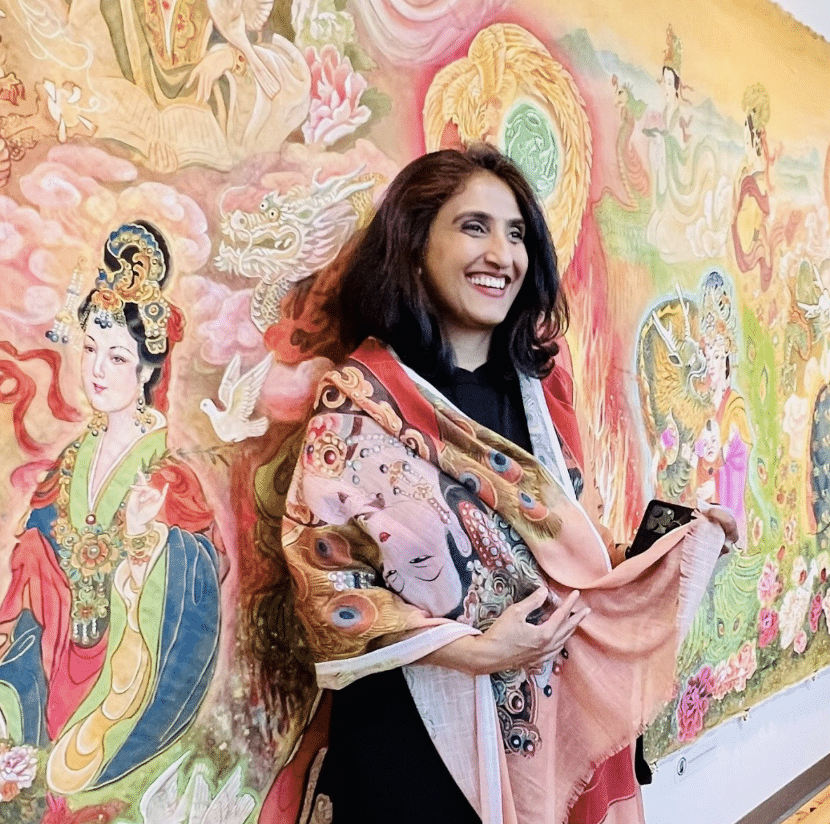
Tripti Gore Chandorkar, the creator and writer behind “triptiji,” launched her blog to celebrate her passion for art, creative projects, and connections with family and friends. With a lifelong love for fine art and writing, Tripti has woven art into her daily life as an enthusiast and hobbyist. Seventeen years ago, her friend Fei Wu introduced her to the artwork of Xiang Li (Fei’s mom), a master artist showcased at xiangliart.com. Since then, Tripti has joined in contributing to Li’s blog, collaborating on designs, and participating in festivals, events, and gallery shows. Through “triptiji,” she shares her journey in the art world and her dedication to supporting other female artists.
More about Tripti