Three Kingdoms
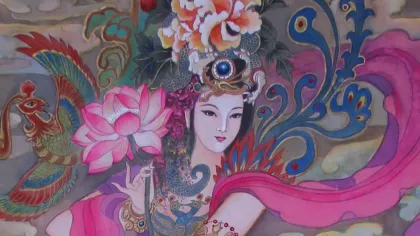
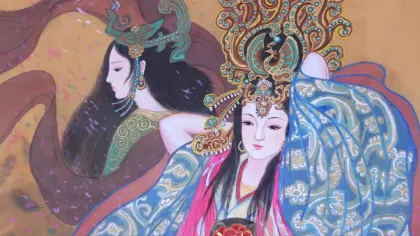
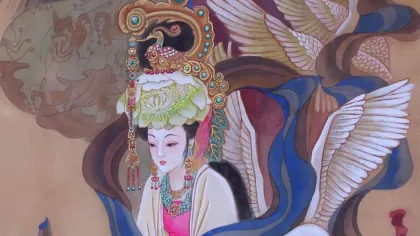
8 portrait chapters in the Chinese Empresses collection.
The era
Three Kingdoms
Chinese Empresses

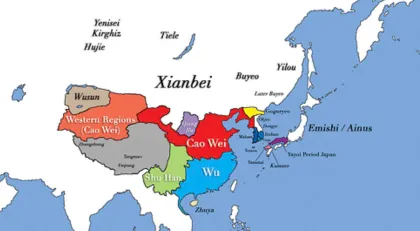
Cao Wei (220-265)
Founded by Cao Pi after forcing the abdication of the last Han emperor, Wei controlled the resource‑rich North China Plain, centered on Luoyang and later Ye. Backed by a sophisticated bureaucracy and strong cavalry, it fielded the largest armies of the era, but court intrigue and successive regencies—most notably by the Sima clan—gradually weakened imperial authority, paving the way for the Sima family to seize the throne and establish the Western Jin.
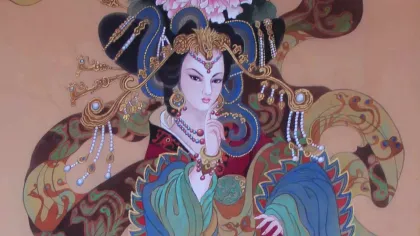
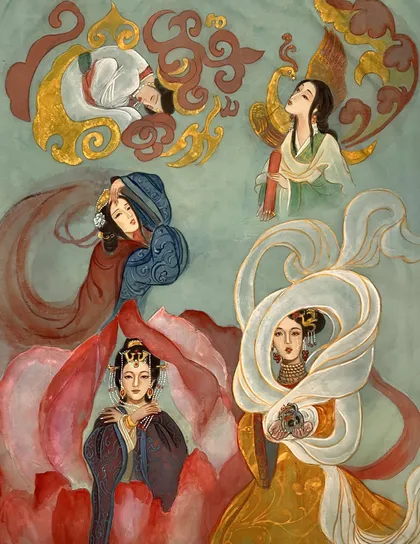
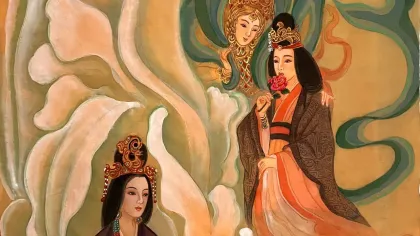
Empress Guo Empress Zhen (Luoshen) Empress Mao and Guo Empress Zhang, Wang and Bian
Shu Han (221 – 263 CE)
Proclaimed in Chengdu by Liu Bei, who claimed kinship with the Han dynasty, Shu ruled the mountainous southwest (modern‑day Sichuan and Chongqing). Its strength lay in natural defenses and the statecraft of Zhu Ge Liang, whose northern campaigns and domestic reforms became legendary. Despite passionate loyalty from its populace, Shu’s limited manpower and resources left it vulnerable; it fell to a Wei invasion led by Deng Ai and Zhong Hui.
Learn more
Eastern Wu (222 – 280 CE)
Established by Sun Quan with its capital at Jianye (modern Nanjing), Wu governed the fertile lower Yangtze and coastal regions. Mastery of riverine warfare and a thriving maritime economy sustained the kingdom for decades, while figures like strategist Lu Xun ensured its survival against Wei aggression. Internal succession struggles and Jin’s eventual unification drive, however, culminated in Wu’s peaceful surrender, ending the Three Kingdoms period.
Learn moreBring the Three Kingdoms era home
Canvas prints, scarves, puzzles and more — from $14.
200+ empresses in a 188-page full-color volume.
A one-of-a-kind portrait on silk, from $5,000.
Questions? Write to [email protected]