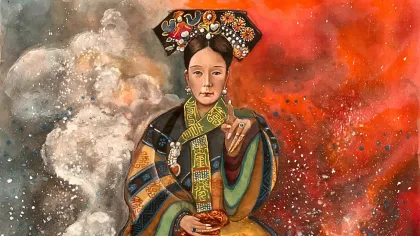
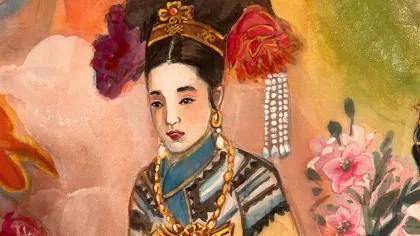
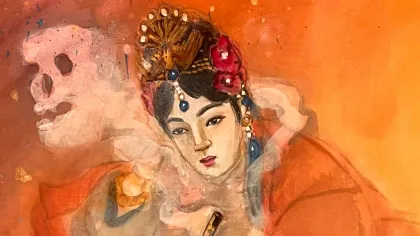
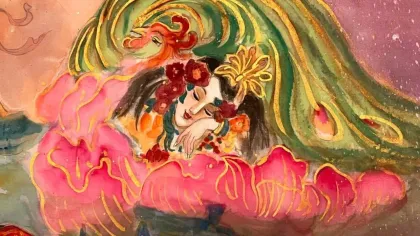
Consort Donggo
https://en.wikipedia.org/wiki/Consort_Donggo
Consort Donggo, a member of the Manchu Plain White Banner Donggo clan, served as a consort to the Shunzhi Emperor, being one year his junior. Little is known about her personal name or family background, except that her ancestral home was in Liaoning. Entering the Forbidden City in the summer of 1656, Consort Donggo garnered deep affection from the Shunzhi Emperor. Swiftly rising in status, she was granted the titles of “Consort Xian” in October 1656 and “Imperial Noble Consort” in January 1657. Her influence in managing the inner court alongside Empress Xiaohuizhang led to court tensions. Consort Donggo suffered the premature death of the emperor’s fourth son in November 1657, and she herself passed away on 23 September 1660. The emperor’s profound grief resulted in a temporary withdrawal from court duties, and two days after her death, Consort Donggo was posthumously honored with the title of Empress, a rare posthumous recognition. She was laid to rest in the Xiao Mausoleum of the Eastern Qing tombs.
Explore other Qing Dynasty empresses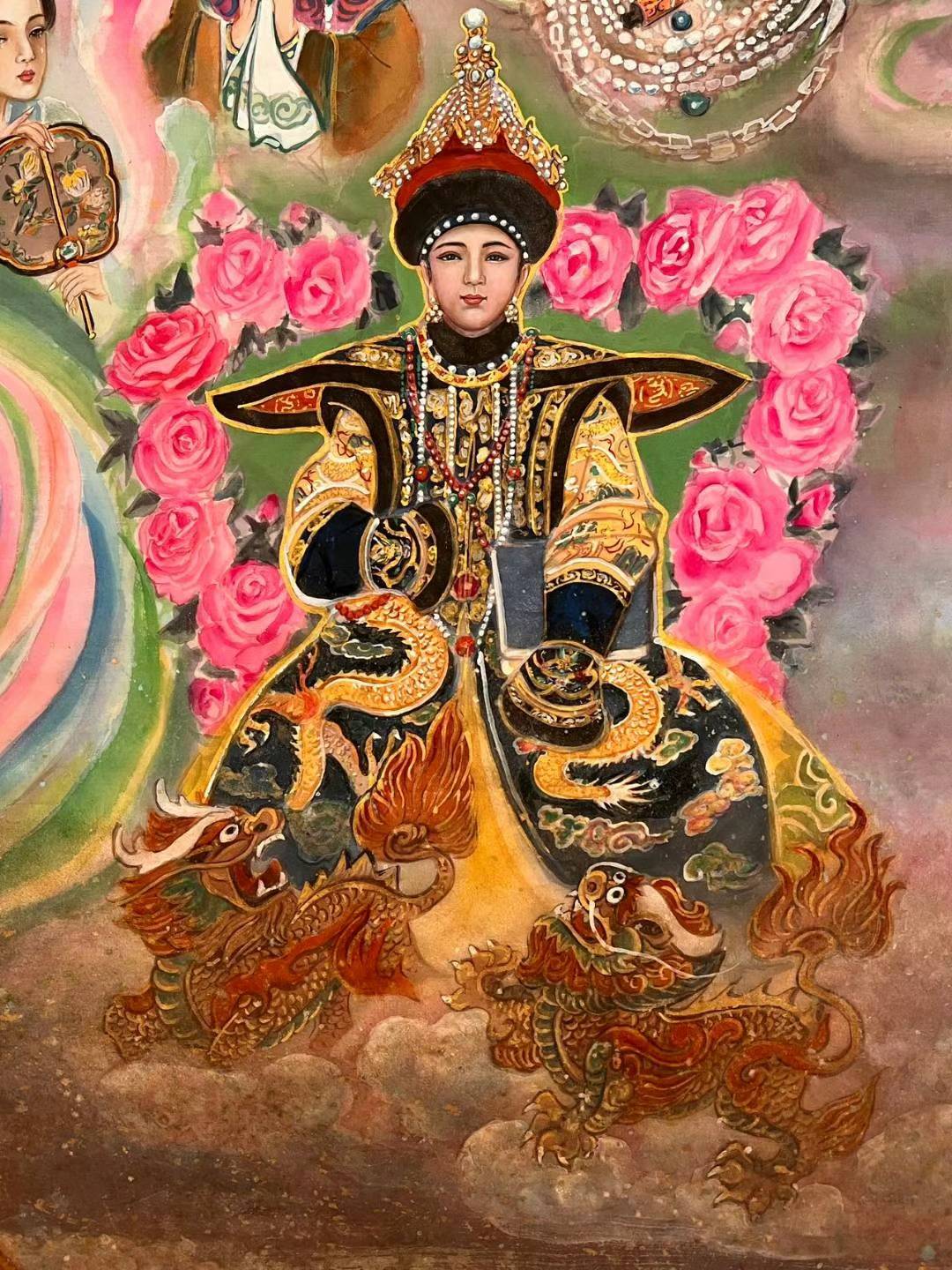
Spouse: Emperor Shunzhi
https://en.wikipedia.org/wiki/Shunzhi_Emperor
The Shunzhi Emperor, Fulin, served as the second emperor of the Qing dynasty of China from 1644 to 1661, becoming the first Qing emperor to rule over China proper. Chosen at the age of five by a committee of Manchu princes to succeed his father, Hong Taiji, the Shunzhi Emperor initially had two co-regents, Dorgon and Jirgalang. Under Dorgon’s leadership, the Qing Empire expanded its territory, overcoming Ming loyalist resistance and implementing policies like the “hair cutting command.” After Dorgon’s death in 1650, the Shunzhi Emperor aimed to rule personally, attempting to combat corruption and reduce the political influence of the Manchu nobility. Despite facing Ming loyalist resurgence in the 1650s, he successfully defeated remaining adversaries, including seafarer Koxinga and the Prince of Gui, by 1661. Unfortunately, the Shunzhi Emperor succumbed to smallpox at the age of 22, leading to his succession by his third son Xuanye, known as the Kangxi Emperor, who reigned for sixty years. The Shunzhi era remains relatively obscure in Qing history due to fewer surviving documents. His posthumous name at the Imperial Ancestral Temple was Shizu.

More from Xiang Li Art

Wang Mang

Empress Xiaoping (Empress Wang)

Empress Fu

Empress Wang (Xin)

Empress Xiaoyuan

Empress Chen Jiao and Empress Wei Zifu

Empress Bo and Empress Wang Zhi

Empress Dou (Empress Xiaowen)

Empress Xiao Hui (Zhang Yan)

BJ Miller

Krista Tippett

Creative Portraits

The Monk (Wen Miao Zhen Ren)

Lin Daiyu

Xue Baocai

Jia Mu

Zhen Shiyin

Shi Xiangyun

Wang Xifeng

Xu Pingjun, Huo Chengjun and Empress Wang Zhengjun

Empress Xu